
California and Jalisco Sign Agreement for Promise of a Brighter Future

California and the Mexican state of Jalisco have signed a memorandum of understanding (MOU) to collaborate and reaffirm a commitment to share knowledge on clean energy efforts to combat climate change.
The MOU, which was signed March 9, builds on years of collaboration between California and Jalisco State and the Mexican federal government on energy efficiency. The partnership has led to the recent opening of a lighting efficiency center in Jalisco. The center is modeled on the California Lighting Technology Center at the University of California, Davis.
Jalisco, like California, is at the forefront in researching and deploying clean energy technology. The 15,000-square-foot lighting center was created to accelerate the development and adoption of energy-efficient lighting and daylighting technologies. Such efforts can help Mexico meet its long-term energy efficiency and greenhouse gas emission reduction goals.
Commissioner J. Andrew McAllister of the California Energy Commission (CEC) attended the opening ceremony for the Centro de Tecnología en Iluminación (CTI) at the Universidad Autónoma de Guadalajara.
“The CTI is an example of how we will find solutions that apply here, there and far beyond—through collaboration. These actions are going to change Mexico and the world,” McAllister said at the December ceremony.
The center, which highlights the university’s futuristic lighting technology, has 11 laboratories that can simulate a range of environments such as retail, classroom, and health care. With space for research, demonstrations, and benchmark testing, the facility will help support technological innovations. The plan is to build talent and human capital for Mexico’s lighting industry by offering on-site training and certification.
The center’s roots can be traced to a 2016 MOU signed by CEC Chair Robert B. Weisenmiller and Jalisco Governor Aristóteles Sandoval at the Climate Summit of the Americas in Guadalajara, Mexico. The MOU supported cooperation on clean energy policies and programs involving energy efficiency, renewable energy development and grid integration, and low- and zero-emission vehicles.
In 2017, the Mexican Ministry of Energy and the Mexican Council for Science and Technology awarded funds to the Universidad Autónoma de Guadalajara to partner with UC Davis to establish the center. The facility provides the vehicle to translate energy-efficient research into action and train professionals with the information to implement it.
CEC’s Public Advisor’s Office Expanding Its Role
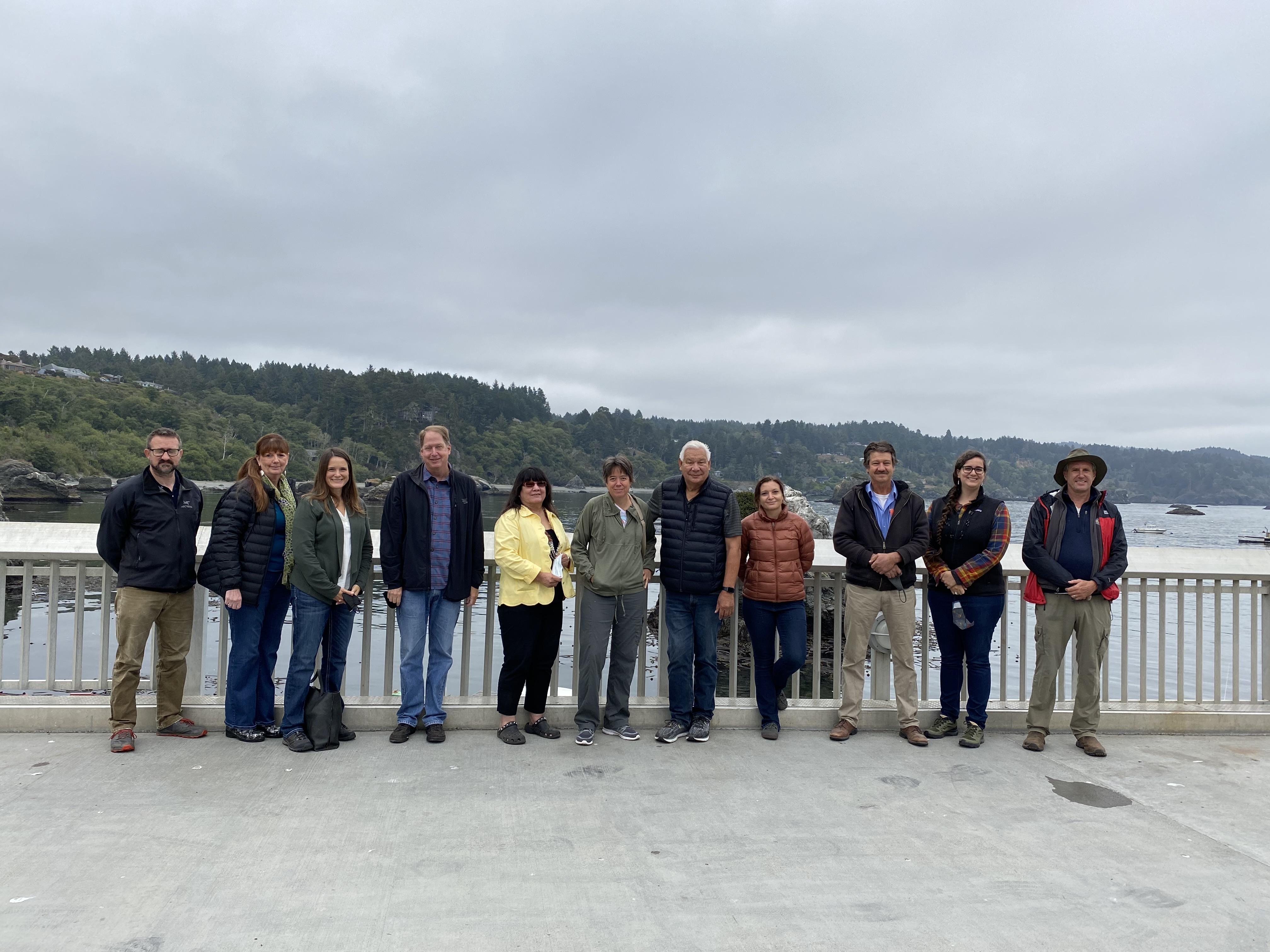
The office advises the public, tribes, stakeholders, and the CEC to ensure the full and effective participation by all interested groups and the public at large in the planning, procedures, proceedings, business meetings, workshops, and other activities of the CEC.
Under the expansion, which was announced at the November 15 business meeting, the office, which is now the Office of the Public Advisor, Energy Equity, and Tribal Affairs, includes a deputy public advisor who is also the tribal liaison and will support the CEC’s Inclusion, Diversity, Equity, and Access Initiative led by Public Advisor Noemí Otilia Osuna Gallardo and Equal Employment Opportunity Officer Carousel Gore.
The office’s name change amplifies the CEC’s commitment to advancing a clean energy future for all and makes the importance of energy equity and tribal relationships more apparent to the public, Gallardo said.
“It makes a lot of sense for the Public Advisor’s Office to officially take on a title that reflects the year of hard work and the many contributions that the office has been making in order to help ensure that the Energy Commission’s work around equity, diversity, and inclusion (has impact),” said Commissioner Karen Douglas, who is the lead commissioner on tribal affairs.
The CEC’s Tribal Program, which was housed under the Siting, Transmission, and Environmental Protection Division, was shifted in order to help expand outreach and engagement with tribes about potential opportunities and funding beyond cultural resources. The program assists California Native American tribes with planning and development efforts for energy policy and technologies. Efforts include climate change assessments, energy research, project funding, and regulation drafting.
In May 2021, the CEC hosted a Tribal Energy Resilience Conference where state agencies and federal and tribal nations discussed pathways for increased clean energy funding, renewable energy incentives, and greater energy and climate change resiliency on tribal lands and resources. Part of the conference outcomes included a report summarizing the discussions and recommendations from the event.
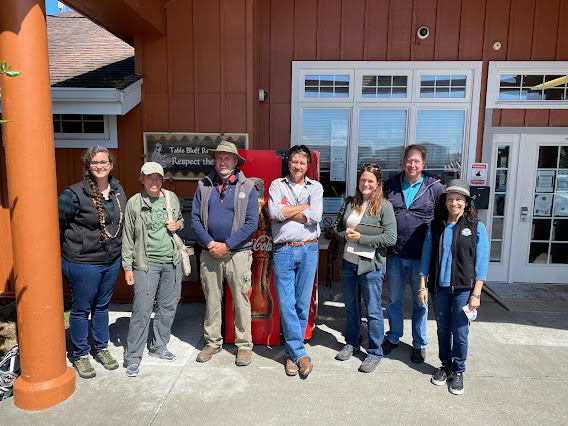

There was a consensus at the business meeting that efforts should be made to ensure that indigenous voices are heard and incorporated into infrastructure policies, acknowledging the role of the government to listen to and honor the history of California tribes.
CEC Approves 2022 CALGreen Building Standards Code — to Improve Buildings and Advance State’s Climate Goals

Sacramento—The California Energy Commission (CEC) has approved the latest version of CALGreen, setting the stage for the California Building Standards Commission (CBSC) to adopt it as part of Title 24, the Building Standards Code.
During the CEC’s September 30 business meeting, several groups, including the Natural Resources Defense Council (NRDC) and the Sierra Club voiced support for the action.
The first CALGreen code was developed by the CBSC and other state agencies in 2007 in response to California’s Assembly Bill 32 that mandated greenhouse gas (GHG) emissions be reduced to 1990 levels by the year 2020. California met that goal, and CALGreen continues today to help decarbonize the state’s second-largest producer of GHGs—buildings.
CALGreen is a mandatory green building code with additional voluntary provisions. Many local jurisdictions choose to adopt those provisions because those are more resource-efficient and environmentally friendly than state-mandated building codes. But CALGreen doesn’t outpace the rest of California’s building code for long: after a couple of years of real-world testing, the voluntary provisions lay the groundwork for mandatory requirements for the next statewide building code.
CALGreen goes through an update and approval process by the CEC every three years, but it’s not the only part of Title 24 that does this. The 2022 update of Part 6, known as the Energy Code, was approved in the CEC’s August business meeting. Both Energy Code and CALGreen are scheduled to go before the CBSC in mid-December 2021. If they are approved, they would be published in 2022 and go into effect on January 1, 2023, to give builders, contractors, and other interested parties a year to gear up for the changes.
CEC Commissioner J. Andrew McAllister said will help CALGreen California pivot more deeply toward the path of clean, low-carbon technologies “where things will be going in the future.” Electrifying buildings is critical to helping the state meet its long-term climate and carbon neutrality goals, which is why CALGreen has provisions for including home battery storage for solar and heat pumps for space and water heating.
Why California Needs Codes “Beyond The Building Code”
CALGreen improves public health, safety, and general welfare through enhanced design and sustainable construction of buildings while conserving natural resources. Adopting all of CALGreen's 2022 standards will save more energy and reduce GHGs further than current mandates. GHGs could be reduced on average by 0.2 metric tons per building, per year, compared to the mandatory Energy Code. That’s like having 2,600 fewer cars on the road for the first year, according to the CEC.
The total impact of the carbon dioxide emissions from the 2022 Energy Code and CALGreen updates equals sidelining 8,000 cars for the first year, and 24,000 cars by the third year.
When municipalities want to build greener, more sustainable buildings than the building code requires, they can adopt all or part of CALGreen's package of pre-analyzed measures for their own reach codes. Builders, designers, and other construction industry stakeholders then see these measures operating in the real world. This helps to encourage their use and expands the market for manufacturers and service providers of emerging technologies. Collectively, it reduces the costs of energy efficiency and building decarbonization for consumers. In this way CALGreensignals the future direction of the Energy Code.
How Climate Goals Become Building Standards
CALGreen covers a number of fields, with regulations encompassing energy efficiency, water conservation, sustainable building materials, site design, and air quality. That means a number of state agencies are involved in creating CALGreen and its updates, including:
The CEC (energy efficiency standards)
The California Department of Housing and Community Development (construction standards for homes)
The Building Standards Commission (nonresidential buildings standards), and
The California Division of the State Architect (school construction and access compliance standards)
As part of the development process, interested parties such as builders and environmental groups submit recommendations to the state agencies drafting CALGreen standards. Each agency has a public outreach process to develop standards that they submit to the CBSC for approval.
The 2022 CALGreen update simplifies the code and its application in several ways. It offers new voluntary prerequisites for builders to choose from, such as battery storage system controls and heat pump space, and water heating, to encourage building electrification.
For more information on CALGreen see the September 28 CEC Business Meeting, Item 2 . Adoption of the 2022 California Green Building Standards Code Voluntary Residential Energy Efficiency Measures and Other Energy References at 6:39.

